
Plain-language basics
How These Technologies Work
Before weighing any project, it helps to understand what these things actually are. This page explains — in plain language — how data centers and battery storage work, what they look like, and how they're cooled and powered. For concerns and the City's responses, see Concerns & Responses.
Data centers
What actually happens inside
A data center is, at heart, a building full of computers. Inside are rows of racks holding servers — the machines that store data and run the websites, apps, business software, and cloud services we all use — plus the networking gear and storage that tie them together.
- It mostly runs itself. The work is electronic — data flowing in and out over fiber-optic lines — so day to day it's highly automated and monitored remotely, with only a small on-site crew for security and swapping out failed parts.
- It's built never to go down. That's why it has redundant power and cooling and tight physical security — reliability is the whole product.
- It's not a factory. Nothing is manufactured, processed, or shipped out — no assembly lines, smokestacks, or fleets of trucks. The "output" is data over a wire, which is why day-to-day traffic is so low.
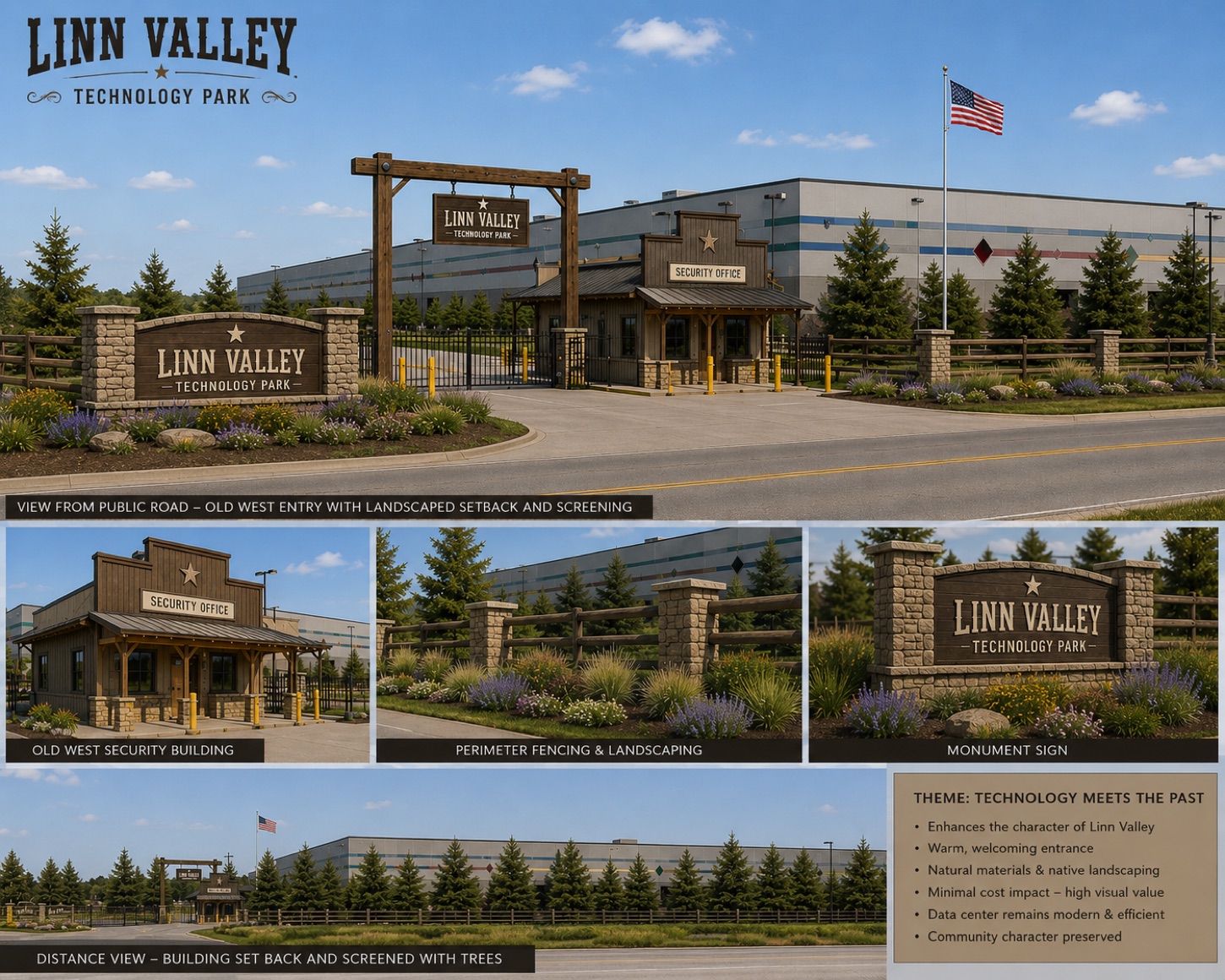
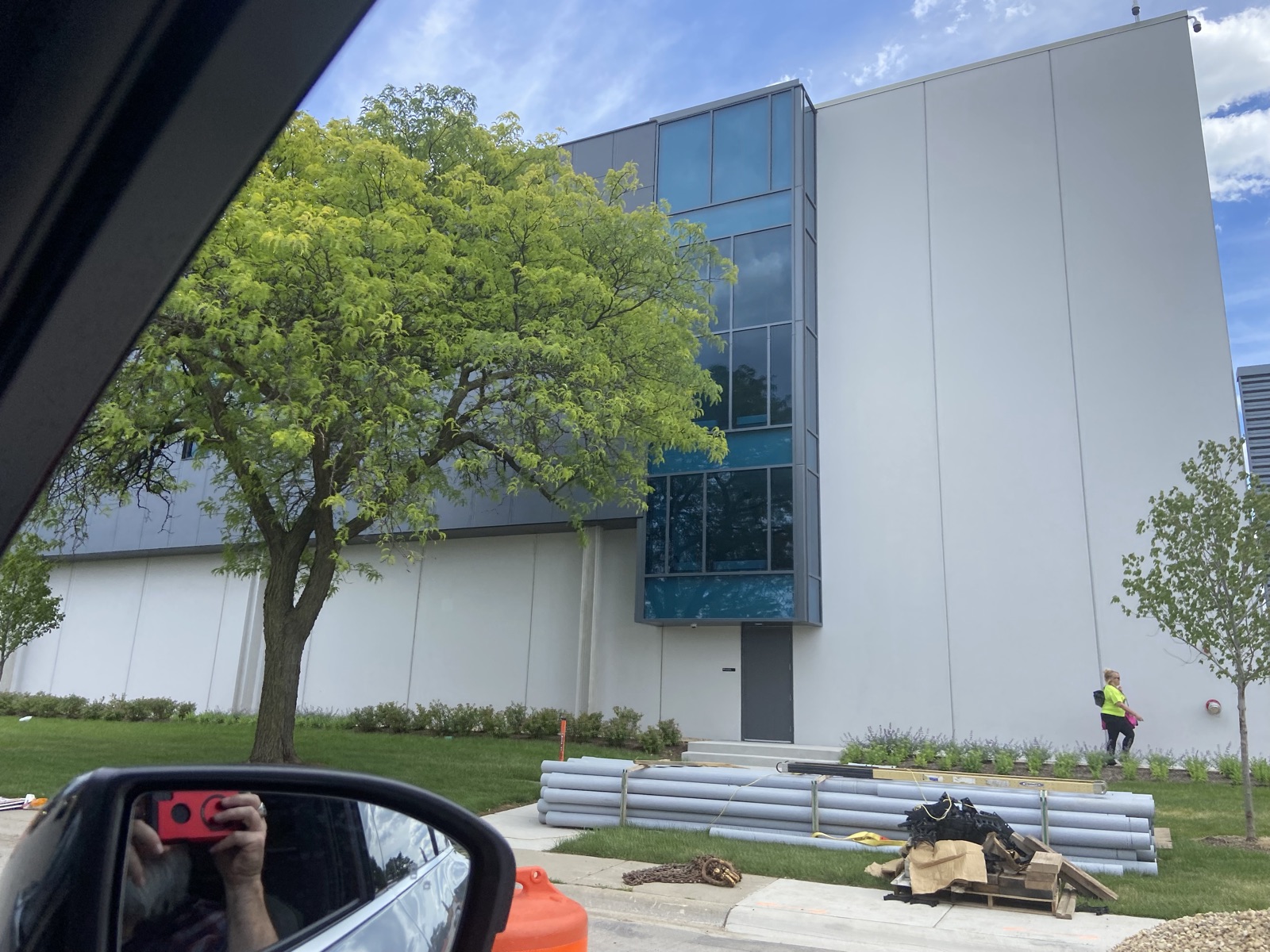
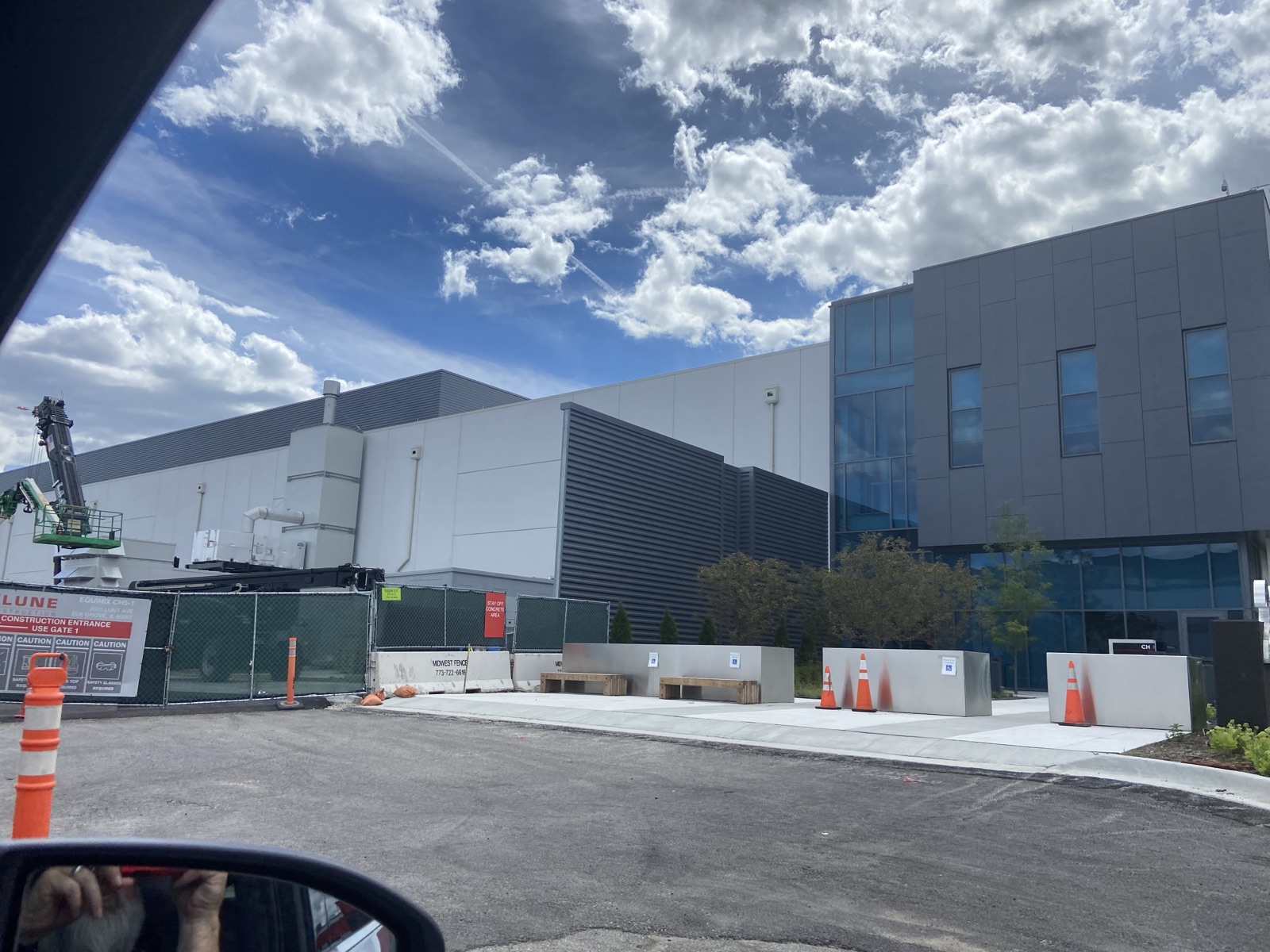
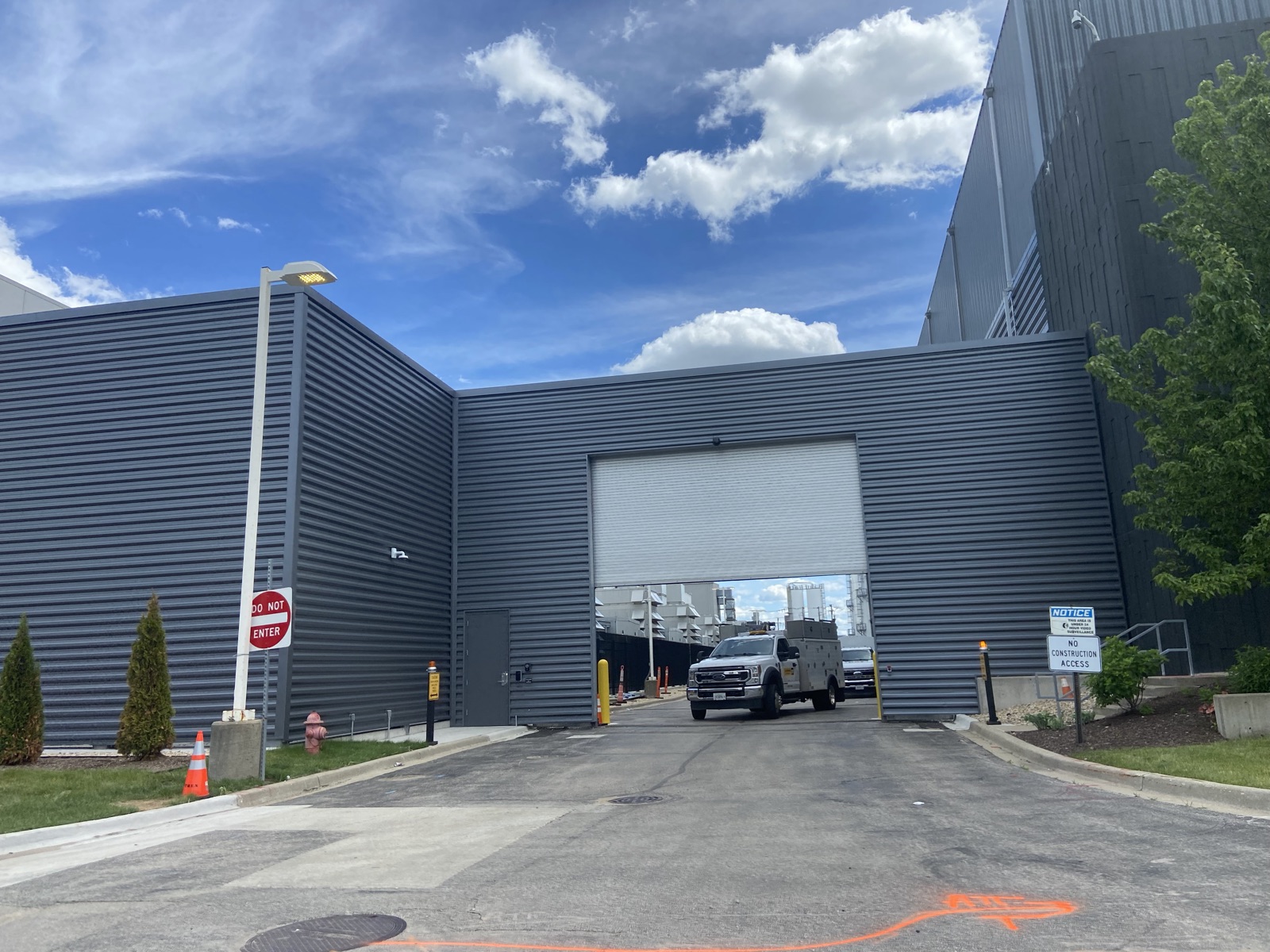
What they look like. Below is one concept for how a facility here could fit our community, alongside photos of existing data centers in Elk Grove Village, Illinois. The draft ordinance's architectural standards (Section 12) would require quality materials and discourage a plain, warehouse-style appearance here.
How data centers are cooled — and what the City would allow
Cooling is the single biggest factor in how much water a data center uses, and the options differ enormously:
- Air-cooled — uses essentially no water (it uses more electricity instead).
- Closed-loop / liquid cooling (including newer chip-level systems) — filled once and recirculated, using little ongoing water.
- Hybrid / "adiabatic" — mostly air-cooled, with light evaporative assist only on the hottest days.
- Evaporative cooling towers — the most water-intensive option, which also requires chemical treatment and permitted wastewater discharge.
- Immersion — servers submerged in a non-water dielectric fluid; no cooling-water discharge.
The City's intent is clear: favor low-water designs (closed-loop and air-cooled), and most likely not permit water-intensive evaporative cooling. The proposed Section 13A — Water Resource Protection would require an applicant to disclose its cooling technology, and a project may not materially impact the community's water. For the water-quality risk of each option, see Water Quality.
How data centers are powered — and how that power is managed
A data center is a large, steady electricity user, so how it connects to and works with the grid matters as much as how much it uses:
- It connects to the electric grid. A large user ties in through the utility's interconnection process, usually at or near an existing substation or transmission line — which is exactly why proximity to that infrastructure is what puts a community on a developer's radar in the first place.
- Backup is for reliability, not everyday power. Facilities keep on-site backup — battery units for instant ride-through and generators for longer outages — but the City would require a project to run on the grid, with generators limited to backup and testing (see Section 13B).
- Efficiency is measured — and improving. "Power Usage Effectiveness" (PUE) tracks how much overhead a facility adds on top of the computing itself, and modern facilities are far more efficient than a decade ago (more in Growth & Efficiency).
- Power can be actively managed. On-site batteries can store energy and release it at peak demand, and large users coordinate with the utility — which can actually help grid stability rather than only draw from it (see The Power Grid and battery storage, below).
What this means locally: a project connects through the utility, the developer — not residents — funds the infrastructure its load requires, retail rates are set by the Kansas Corporation Commission (not the City), and the City would confirm the provider can serve a project without degrading residential service.
Battery energy storage (BESS)
What it is and how it works
A battery energy storage system (BESS) does one simple job: it stores electricity and releases it later. It's built from banks of batteries (usually lithium-ion) in weatherproof cabinets or containers, plus power-conversion equipment that moves energy between the grid's alternating current and the batteries.
- Charge low, discharge high. It charges when electricity is abundant — midday solar, or overnight when demand is low — and discharges during peak demand, helping balance supply and improve reliability (more on the grid).
- It sits next to the grid. Because its job is to support the grid, it's typically located beside an existing substation.
- Small and quiet. A small (~1-acre) facility is a handful of enclosures behind a fence — unstaffed, low-noise, and monitored 24/7.
- It doesn't generate power. Unlike a power plant, it makes no electricity of its own — it only stores and returns what's already on the grid.
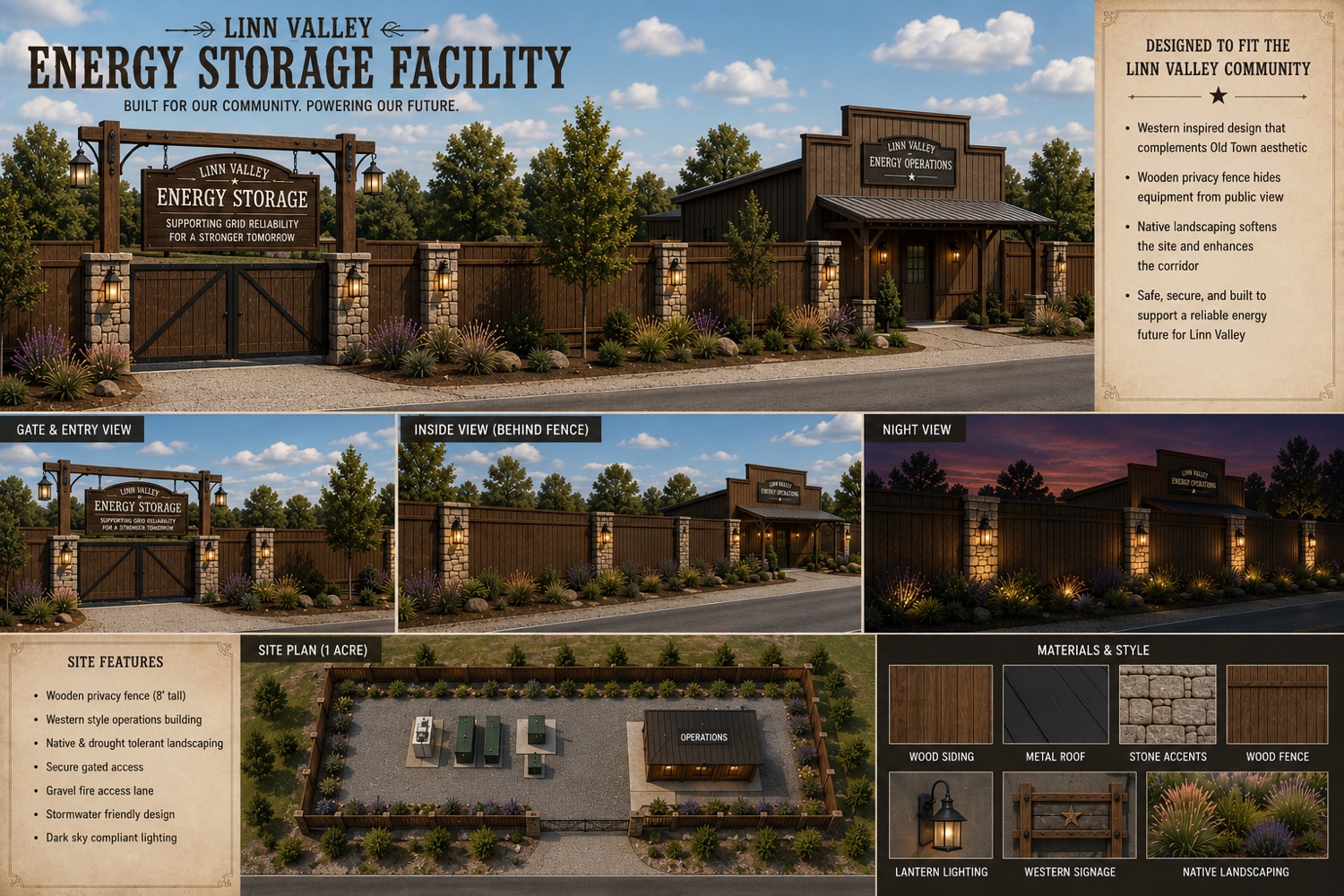
What one could look like. Below is an illustrative concept for a small (about one-acre) battery facility designed to fit our community.
On the questions people ask most about batteries — fire safety and emergency response — see Battery Fire Safety.